PRINTMAKING PROCESS
LINOCUT
Linocut, like woodcut, is a relief printing process. It emerged in the early 20th century, using linoleum instead of wood, and became particularly popular in Britain at the end of the 1920s. Today, various types of blocks are used for linocut printing, including synthetic “vinyl” or “soft cut” materials. However, I much prefer working with traditional grey linoleum, made entirely from natural ingredients — linseed oil being the key one — and fully biodegradable!
It is similar to stamp-making. The design is first drawn onto the surface of the lino plate. The areas that are meant to print white are cut away using sharp “v” or “u”-shaped tools called gouges. When inking with a roller or brayer, the uncarved, intact surface of the lino block receives the ink, which is then transferred onto paper using a relief press. In contrast to an intaglio press — which forces ink out of recessed grooves beneath the plate’s surface with one or two rolling barrels — a relief press transfers ink from the raised, inked surface by applying pressure directly from above. I print either with my Woodzilla relief press or, very often, simply by hand using my trusty old wooden kitchen spoon to apply pressure.
Linocut is often regarded as an accessible and affordable printing technique, yet it offers endless possibilities for creating intricate, expressive works of art.
I especially enjoy making multi-coloured linocuts, sometimes using the multi-block technique, where several lino plates are prepared — one for each colour layer — with a “key” block defining the main outlines of the design. My favourite method, however, is the reduction technique (also known as the “waste” or “suicide” method). In this process, each layer is created by successively carving and printing from the same plate, allowing for faster work and greater spontaneity. Once the edition is complete, the plate is destroyed — completely carved away — making reproduction impossible, and therefore highly valued by art collectors.
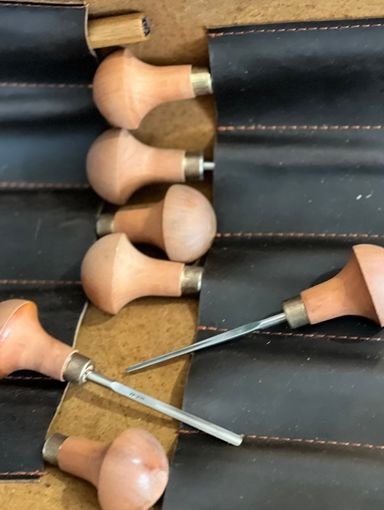
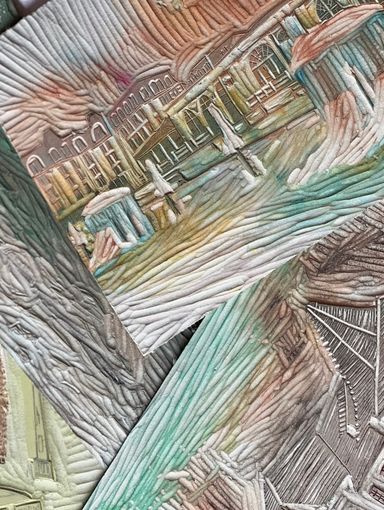
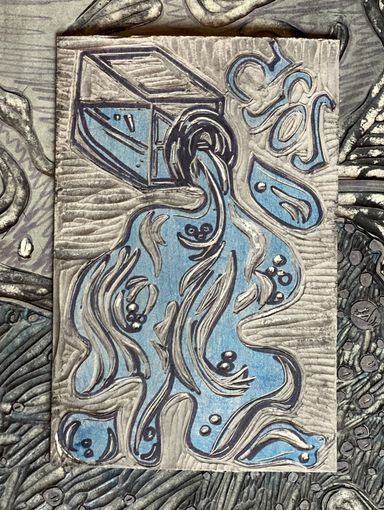
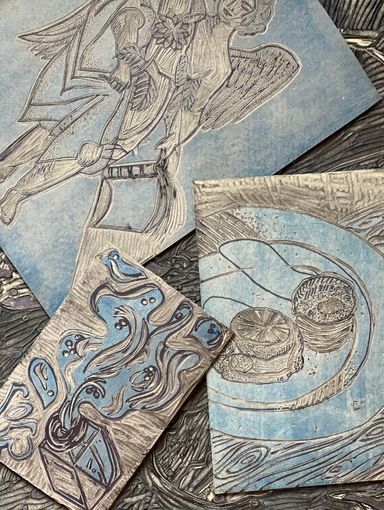
Linoplates after printing
MEZZOTINT
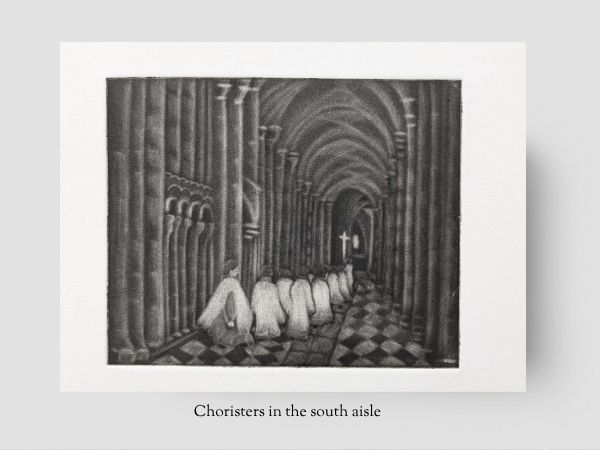
Mezzotint is a form of intaglio printing (from the Italian intagliare, meaning “to cut in”). In intaglio processes, the ink is held in tiny incised lines or grooves below the surface of the plate, rather than on its surface. The ink is pushed into these recessed areas, and any excess ink left on the surface is carefully wiped away. The paper, slightly dampened, is then laid over the plate and passed through an intaglio or etching press. The pressure forces the paper down into the grooves, allowing it to absorb the ink and reveal the image.
Unlike other intaglio techniques such as etching—where the artist uses a tool or acid to create lines and marks that will hold the ink—the mezzotint process begins with a plate that has already been completely roughened. This is done methodically with a curved, finely toothed tool called a rocker, which covers the surface with thousands of tiny indentations. If you were to print this “rocked” plate before doing any further work, the result would be a rich, velvety black. To create an image, the artist then lightens the plate by smoothing and burnishing certain areas, flattening the rough texture so that less ink is held there, producing a range of tones from deep black to pale grey and white.
I fell in love with this technique. Though demanding, it is fascinating to work “from dark to light,” rather than “from light to dark” as in most other artistic processes. I also find the subtle, glowing quality of the image as it emerges from the velvety darkness truly remarkable.